There's No Single Answer
If you're searching for a simple number — "you need exactly 5 cords" — you won't find one here. The truth is, firewood needs vary dramatically from one household to the next. What works for your neighbour might not work for you, and that's perfectly normal.
The good news is that by thinking through a few key factors, you can make a confident estimate and adjust as you go.
Primary Heat vs. Supplemental Heat
This is the biggest factor. If firewood is your primary heat source and you're relying on it to keep your home warm all winter, you'll naturally need significantly more than someone who fires up the woodstove on weekends or uses it to take the edge off alongside another heating system.
Think honestly about how you plan to use your firewood. A household that heats exclusively with wood through a full Cape Breton winter is in a very different category than one that lights a fire on cold evenings for comfort.
Home Size and Insulation
A small, well-insulated cabin holds heat efficiently and needs far less firewood than a large, drafty farmhouse. Consider:
- Square footage — larger homes require more heat to maintain a comfortable temperature
- Insulation quality — older homes with thin walls or single-pane windows lose heat faster
- Ceiling height — heat rises, and tall ceilings mean more volume to warm
- Number of floors — a woodstove on the main floor may not heat upstairs bedrooms effectively
Your Stove or Fireplace
Not all wood-burning appliances are created equal. A modern, EPA-certified woodstove extracts far more heat from each piece of wood than an older stove or an open fireplace. If your stove is efficient, your firewood goes further.
An open fireplace, while beautiful, sends much of its heat up the chimney. If that's your setup, expect to go through wood more quickly.
Wood Species
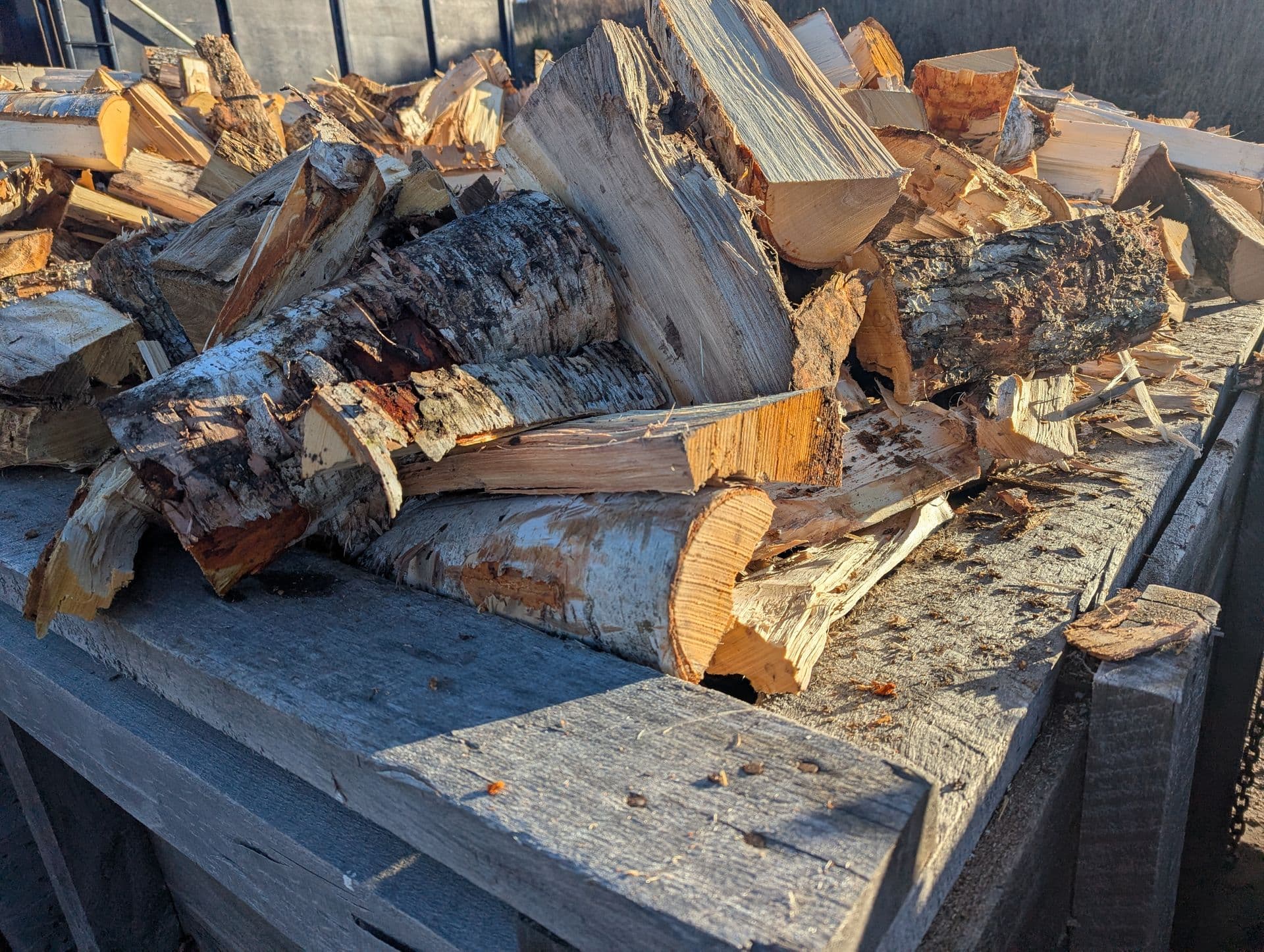
Dense hardwoods burn longer and hotter per cord than softer species. At Hugh MacInnis Lumber, our firewood is a diverse mix of quality hardwood, locally sourced from Cape Breton — which means you're getting excellent heat value in every cord.
Winter Severity
Cape Breton winters are no joke, but they do vary from year to year. A mild winter with temperatures hovering around freezing uses less firewood than a stretch of bitter cold and wind. There's no way to predict this perfectly, so it's wise to have a cushion.
Some Practical Advice
Since every situation is different, here's how we'd suggest approaching it:
- Talk to your neighbours. If you're new to heating with wood, people nearby with similar homes and stoves are your best resource. They've already figured out their numbers through experience.
- Start moderate. If you're genuinely unsure, order a reasonable amount to get through the first part of winter. You can always order more.
- We deliver throughout the season. You don't have to get your entire winter's supply in one shot. Many of our customers place two or three orders over the course of the heating season.
- Keep notes. Track how quickly you go through your first cord or two. That burn rate will tell you a lot about what the full season will look like.
We're Happy to Help
If you're still not sure where to start, give us a call or send us a message. We've been supplying firewood to Cape Breton households for years, and we can help you make a reasonable estimate based on your situation. There's no pressure to commit to a specific amount — we'd rather you order what you need and come back for more than over-order and have wood sitting around.